fig. p-07 · a college social network
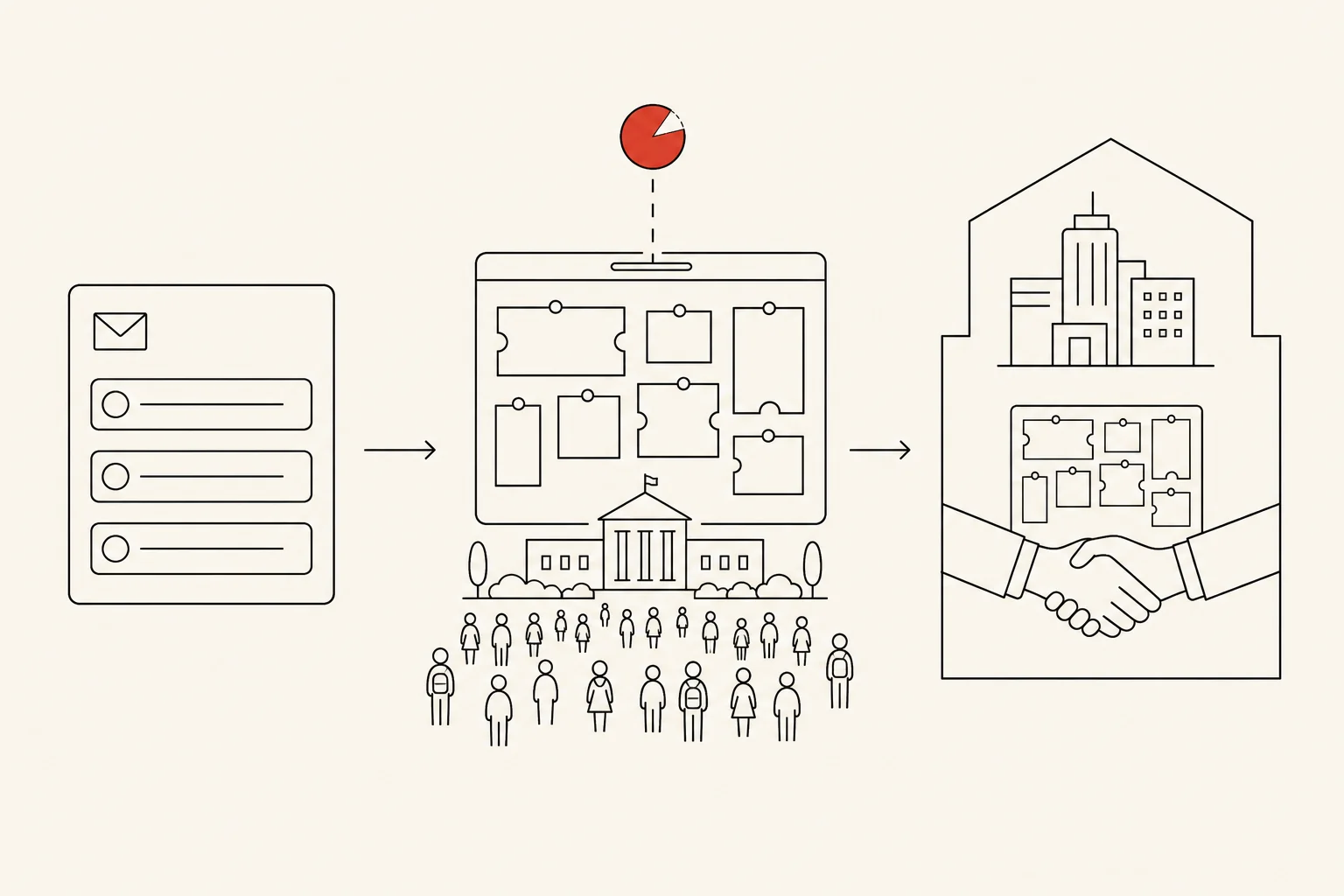
the problem
Campus events already existed. The missing piece was a room people already checked, so a host did not have to invent an audience every weekend.
what I did
It began as an online group where I shared internship openings. The group got large enough that a friend asked if his party could go out through it. I said yes.
Over time it became Circles, the social network where campus life got organised: the events and parties around campus were hosted through it, with a five percent commission on the way through. About 5,000 of a twenty-thousand-person campus came aboard, the most active quarter, the students other hosts wanted to reach anyway. Hosts preferred the channel that already had the room, and the commission made it a real business while I was still a student.
method
Distribution first. I did not start with an app. I started with a list people already opened, and the product arrived after the room did. Revenue was the check: hosts paid a cut because the channel already had the people they wanted.
what I found
By final year the platform had real traction and real revenue, and Slick made an offer: the platform and me with it. Taking it is the decision that started the product career. The origin stayed with me: build the audience before the software.
open
Whether a channel like that can stay honest once it starts charging. The acqui-hire closed the question for me, but it is the right question to ask of any community that becomes a business.